
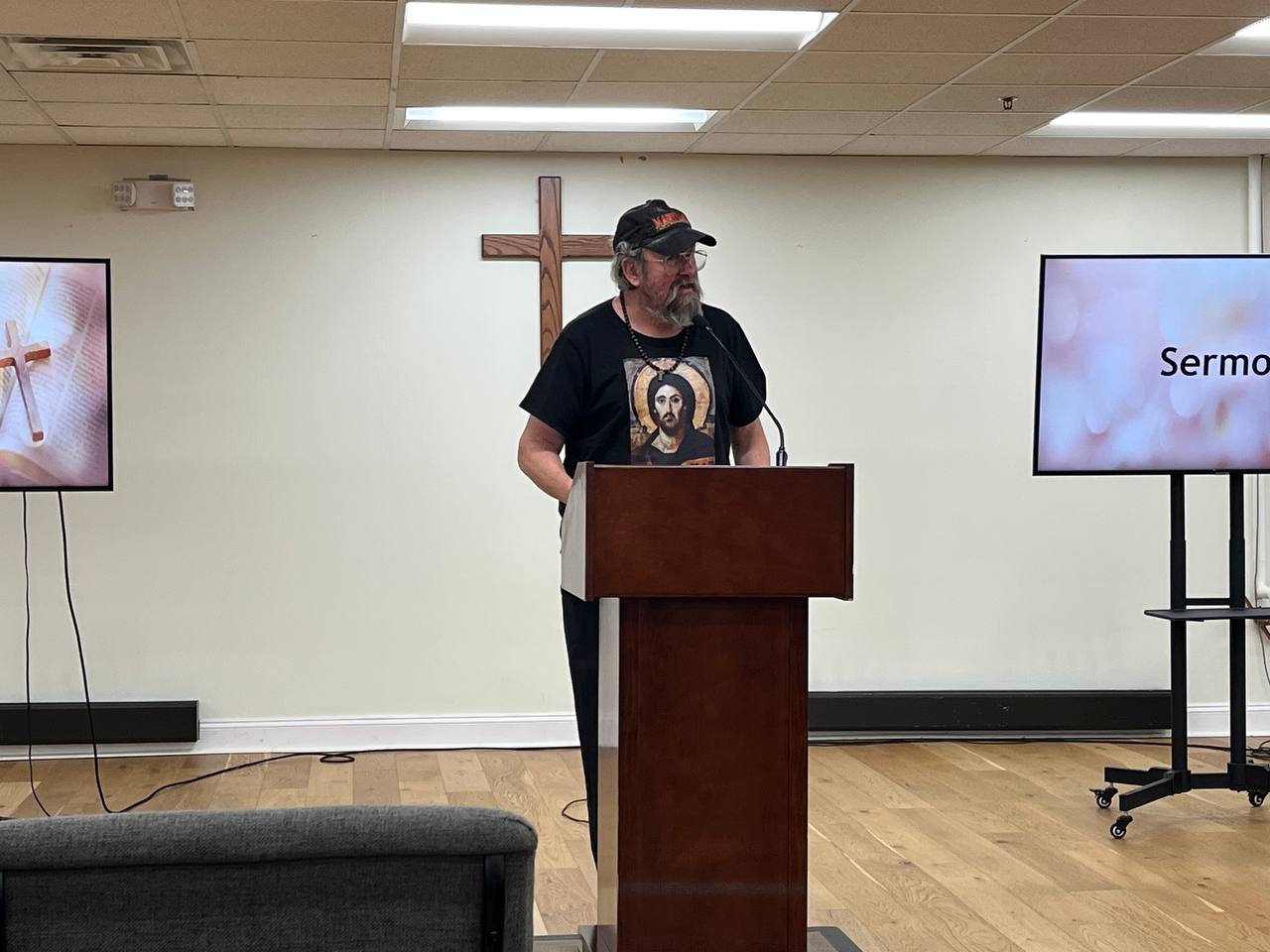
Despite the harsh winter weather, members of Bethel Presbyterian Church gathered on Friday evening, February 6, for a profound lecture by Mr. Michael on the essential attitudes of prayer. The service, which combined deep theological teaching with communal intercession and a moving poetic finale, challenged attendees to rethink their relationship with God in a culture that often prizes power over piety.
Prerequisite Attitudes: Humility and Secrecy
In his lecture, Mr. Michael emphasized that progress in a “constant prayer life” requires specific prerequisites. Drawing from Matthew 6:1-6, he identified two pillars of the prayerful life: humility and secrecy.
- Humility as Reality: Mr. Michael described prayer as a “humble admission that we need [God’s] help” and a realization that we are incapable of accomplishing anything on our own.
- The Model of Leadership: He challenged spiritual leaders to embody this humility by being “accessible, easy to approach,” and “the kind of spiritual leader who would wash the feet of their followers”.
- The Power of Secrecy: Rather than performing for “Oscars” or seeking public praise, believers were encouraged to seek the “secret place”. This privacy prevents the temptation of using “colorful phrases” or “dramatic tones” to impress others, creating instead an environment of internal peace.
“God likely doesn’t care about the display… there is no Oscar for best performance by a prayer leader”.
The Balance of Private and Corporate Prayer
Addressing the upcoming time of group intercession, Mr. Michael clarified that there is no conflict between private and corporate prayer. While the “vast majority” of a believer’s prayer life occurs alone-often totaling only 7 to 10 hours of group prayer per week-corporate prayer serves a vital purpose: it cures the “tunnel vision” of personal pride.
“Corporate prayer redirects us away from our own individual problems to a collective worship of God,” he noted, adding that much of this collective work happens through the powerful medium of corporate singing.
Transformation Against the Grain
The lecture took a counter-cultural turn as Mr. Michael discussed how prayer transforms the individual. Citing author Frederica Matthews Green, he warned that Christ does not transform believers into the “rugged individuals” or “macho” heroes admired by American culture. Instead, prayer molds people into those whom “our culture doesn’t even notice,” defined by vulnerability and selfless service rather than power and control.
A Community in Intercession
Following the lecture, the congregation entered the “secret place” together to pray for eight specific topics:
- Repentance and Gratitude: Reaffirming the humility discussed in the lecture.
- Leadership & Missions: For the Senior Pastor’s health and the Asia mission trip.
- Education: For the school fund and campus development.
- Local Church Growth: Covering missionary recruitment, Baltimore church insurance inspections, and renovations.
- Media & Administration: Seeking breakthroughs in media and business administration.
- Economic & Spiritual Health: Praying for business profit goals, cash flow, and the virtues of faith, patience, and love.
- Campus Support: For teachers and general school development.
- Physical Healing: Specific petitions for Pengfei, Nancy, and Yenyi.
“Why Would You Love Me?”
The evening concluded with a moving original poem by Brother Avery. Titled “Why Would You Love Me?”, the poem used the metaphor of a wayward bride to illustrate the unconditional grace of God. It served as a final reminder that God does not look for “worthiness” or “perfection,” but simply a willingness to be redeemed.
“Show up imperfect that I would be with you and mold you to perfection,” Brother Avery recited, echoing Mr. Michael’s earlier call to stand before God’s altar rather than the world’s stage.